Renovation Diary··3 min read
Our Final Paint Selections: Little Greene Paint Colours Room by Room
After weeks of sample pots and painted card, we've chosen our Little Greene paint colours. Here's what we picked and where each one is going.
There comes a point in every renovation when the sample pots have to stop. Ours arrived this week, after a month of painted card taped to walls, a lot of squinting at different times of day and more debate than we'd like to admit. We've settled on our Little Greene paint colours, and we're thrilled with the palette.
We chose Little Greene because the colours have a depth we kept coming back to, and because so many of the shades draw on historic references. Below is our final list, what each colour is like in real life and which room it's heading for.
Why we chose Little Greene paint colours
Our house has a mix of light: a north-facing front, a bright back and a hallway that sees very little sun. We needed colours that wouldn't turn cold or muddy when the light dropped. Little Greene's palette has a lot of complex, slightly softened shades that behave well across those conditions.
The other attraction is that many colours come in families, with paler and deeper versions of the same hue. That made it easy to build a joined-up scheme where rooms feel related without being identical.
Every colour looked different on the card, on the wall and at dusk. The winners were the ones we still liked at all three.
Bone China Blue for the bedroom
Bone China Blue is a cool, grey-leaning blue with a gentle, chalky quality. Little Greene links it to the soft blues of early twentieth-century ceramics, and you can see why: it has the calm of a well-loved teacup rather than the brightness of a summer sky. It sits right on the line between blue and grey, which is exactly what we wanted for a restful bedroom.
In our north-facing room it reads as a quiet, misty shade. We're pairing it with white bedlinen, natural linen curtains and warm wood to stop it feeling chilly. If you love it but want something lighter or deeper, the Bone China Blue family includes Pale, Mid and Deep versions.
Little Greene Welcome for the living room
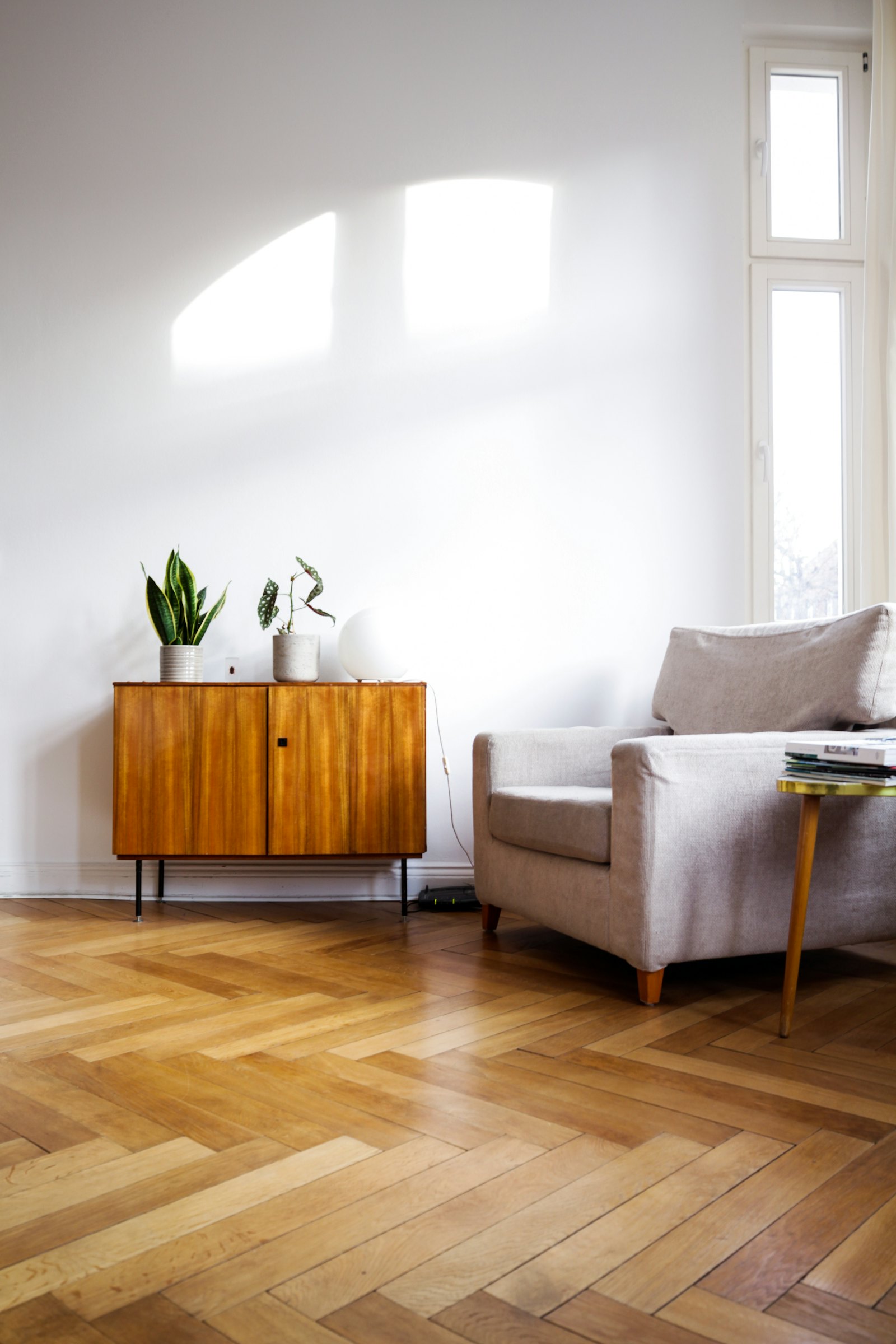
Little Greene Welcome was the surprise of the process. On the chart it looks like a soft, pinkish grey, and Little Greene describes it as a delicate boudoir shade. On our walls it became something much more versatile: warm in the evening, gently neutral in daylight and never sugary.
It's going in the living room, where it flatters both the oak floor and the mid-century pieces we've collected. Like Bone China Blue, it comes in paler and darker versions, so we may use a deeper Welcome on the alcove shelving to add a little shadow and depth.
Lead Colour, Mid Lead Colour and Dark Lead
For woodwork and the hallway we turned to the grey family that Little Greene calls Lead Colour. These are historic, Georgian-feeling greys, and the darker versions are rooted in the shades traditionally used on exterior ironwork and railings. They have a soft, weathered weight that feels far more characterful than a flat modern grey.
- Lead Colour: the mid-tone of the group, which we're using on the hallway walls.
- Mid Lead Colour: a touch deeper, chosen for the skirting and stair spindles so they ground the space.
- Little Greene Dark Lead (sold as Dark Lead Colour): a deep, inky grey for the front door and the garden railings, true to its heritage.
Using three related greys means the hallway feels layered rather than gloomy, and the darker woodwork hides the scuffs that come with a busy entrance.
Our tips for choosing paint
- Paint large samples. A small swatch tells you almost nothing; paint an A3 sheet of card and move it around.
- Check at different times. Morning, afternoon and lamp light can all change a colour.
- Think about neighbours. Look at how each colour sits next to the rooms either side of it.
- Consider the finish. Matt on walls, a tougher finish on woodwork.
Next up in the renovation diary is flooring, and we're already eyeing a Roger Oates runner for the stairs. If you're planning a similarly calm palette, our look at Swedish style is a good companion read.
Questions readers ask
What colour is Little Greene Bone China Blue?
Bone China Blue is a cool blue with a soft grey undertone and a chalky, ceramic-like quality. It sits between blue and grey and also comes in Pale, Mid and Deep versions.
What does Little Greene Welcome look like?
Welcome is a soft, pinkish grey that Little Greene describes as a delicate boudoir colour. In practice it reads as a warm neutral and has paler and darker versions.
What is the difference between Lead Colour and Dark Lead Colour?
They belong to the same historic grey family. Lead Colour is a mid-tone grey, Mid Lead Colour is a little deeper, and Dark Lead Colour is a deep grey traditionally associated with Georgian ironwork.